

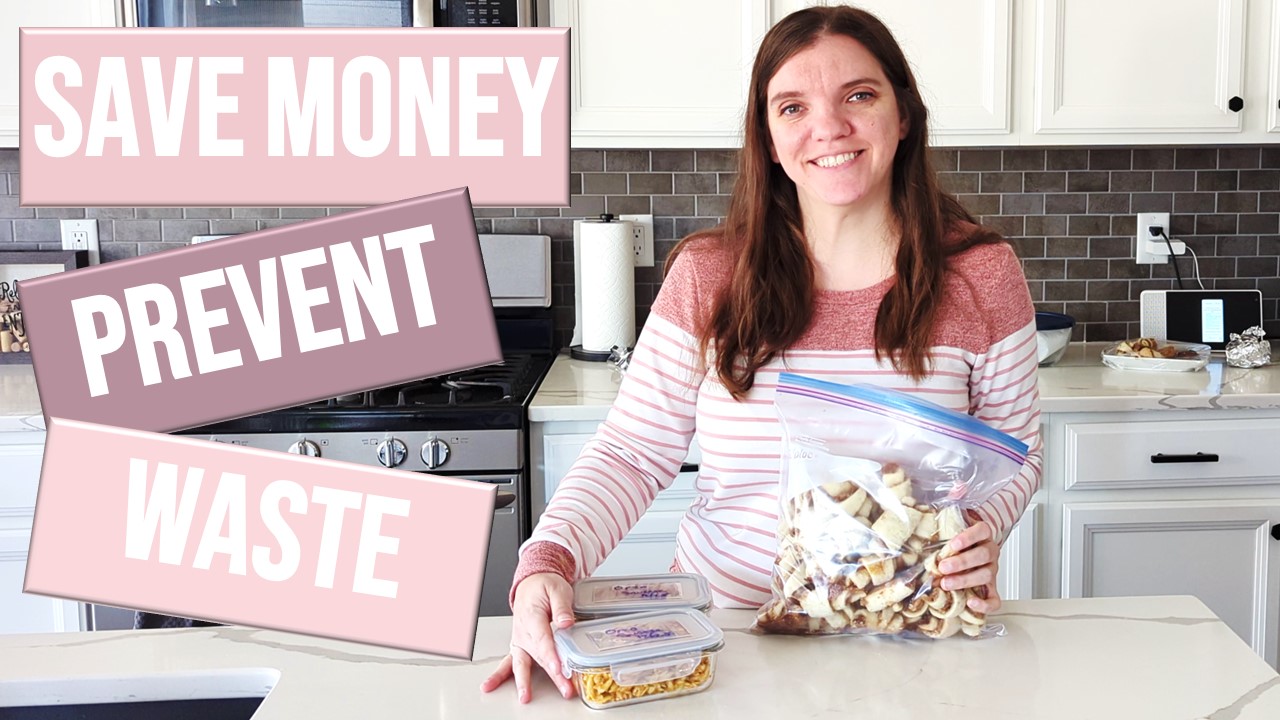
Hey everyone! I’m Kari from Keep It Simple DIY, and today I want to share something that has saved my family hundreds of dollars each year: preventing food waste.
According to recent studies, the average American family throws away nearly $1,500 worth of food annually. That’s money literally going in the trash! As a family of two, I’ve developed a system that keeps our food fresh, our meals varied, and our grocery budget under control.
Here are my seven proven strategies to prevent food waste and save money.
Tip #1: Freeze Leftovers Before They Go Bad
This is my number one rule: If you’re not going to eat it within the next few days, freeze it NOW.
I recently made a delicious orzo pasta dish, and while it was tasty, I knew we weren’t going to finish it before it went bad. Instead of letting it sit in the fridge until it turned into a science experiment, I packaged it up into two individual-sized freezer portions.
Pro tip: I didn’t freeze it in the original container because half of it was empty. Why waste freezer space on air? I transferred it to appropriately-sized containers instead.
The Double Money-Saving Benefit
Freezing leftovers saves you money in TWO ways:
- You don’t waste the money you already spent on ingredients and time cooking
- You create future meals that you don’t have to pay for again
Those two portions of orzo? That’s two dinners I don’t have to plan, shop for, or cook. That’s real savings!
It’s Not Just Dinner
This works for treats too! After Christmas, I had a ton of nut rolls and cookies – some I made, some from neighbors. If Nick and I tried to eat all of those right away, well… that would be way too many cookies (is there such a thing?). Instead, I froze them, and now we have treats to enjoy throughout the year.

Tip #2: Package Food in Portions That Work for YOUR Family
This tip is crucial, especially for smaller families like mine.
Standard recipes are often designed for families of four or more. As a family of two, cooking a full 9×13 pan of lasagna means we’re either eating the same thing for a week straight or throwing half of it away. Neither option is ideal!
My Solution: Half-Size Freezer Meals
I use small pans that are about half the size of a standard 9×13 pan. These work perfectly for us because:
- Each pan provides dinner for both of us
- We usually have one serving leftover for lunch
- We don’t get sick of eating the same thing
- Nothing goes to waste
Here’s what I do: When I want to cook in bulk, I make TWO different meals instead of doubling one recipe. That way, we have variety in our freezer without the waste.
Single-Serve Options
I also love making single-serve freezer meals. These are perfect for:
- Days when we want different things for dinner
- Quick lunches
- When one of us is traveling
- Portion control
The key is finding what works for YOUR family size and eating habits.
Tip #3: Repurpose Leftovers into New Meals
One of my favorite ways to prevent food waste is transforming leftovers into completely different meals. This keeps things interesting and ensures nothing goes to waste.
Real Example: From Burrito Bowl to Enchiladas
Recently, I made burrito bowls for dinner. The next day, I took those same ingredients and transformed them into enchiladas. I even made an extra batch as a freezer meal!
The benefits:
- No wasted food
- We didn’t have to eat the exact same thing twice
- I created a bonus freezer meal for later
- Minimal extra effort required
Other Repurposing Ideas
- Roasted chicken → chicken soup, chicken salad, or chicken quesadillas
- Grilled vegetables → pasta primavera, frittata, or veggie pizza
- Rice → fried rice, rice pudding, or stuffed peppers
- Mashed potatoes → potato pancakes or shepherd’s pie topping
Get creative! Often the “new” meal is even better than the original.
Tip #4: Store Food Properly to Maximize Freshness
Proper storage can be the difference between food lasting a week or going stale in two days. This is especially important for pantry staples that you buy in bulk.
Airtight Containers Are Your Friend
Items like cereal, crackers, flour, and sugar should be stored in airtight containers. This prevents:
- Staleness
- Moisture damage
- Pest problems
- Flavor loss
My system: If you watched my pantry tour, you know I transfer most dry goods into clear, airtight containers. Yes, it’s an extra step when you bring groceries home, but it saves money in the long run.
Know Your Storage Requirements
Different foods have different storage needs:
- Potatoes: Cool, dark, dry place (NOT in the fridge!)
- Onions: Cool, dry, well-ventilated area
- Bread: Room temperature for daily use, freezer for long-term storage
- Herbs: Some do better in water like flowers, others wrapped in damp paper towels
- Tomatoes: Counter until ripe, then refrigerate
Taking five minutes to store things properly can add days or even weeks to their shelf life.
Tip #5: Use All Parts of the Meat
This tip is a game-changer for your grocery budget. When you buy meat, especially whole birds or bone-in cuts, you’re paying for the entire thing. Why not use ALL of it?
The Turkey Broth Example
At Thanksgiving, we had turkey for dinner. But I didn’t stop there. After we carved the meat, I took the turkey carcass and made turkey broth.
Here’s why this is so smart:
- Store-bought broth costs $2-4 per quart
- From one turkey carcass, I can make 8-12 quarts of broth
- That’s potentially $24-48 worth of broth
- My only cost? The price of canning lids (if I’m canning it)
- If I’m freezing instead of canning, it’s basically FREE
It’s Not Just Turkey
You can do this with:
- Chicken bones and carcasses
- Beef bones (for rich beef stock)
- Pork bones (for ramen or pho)
- Ham bones (for split pea or bean soup)
- Vegetable scraps (for vegetable broth)
Storage tip: Keep a bag in your freezer and add bones and vegetable scraps as you cook. When the bag is full, make a big batch of broth!
Tip #6: Freeze Excess Liquids
This is such a simple tip, but it saves so much waste!
Many liquids come in large containers that are hard for small families to use up before they expire. The solution? Freeze them!
What I Freeze
Milk: Milk containers are HUGE for a family of two. I portion it into one-cup servings and freeze them in my garage freezer. This is perfect because:
- Most recipes call for 1-cup measurements
- It thaws quickly
- No waste from spoiled milk
- I can buy when it’s on sale
Orange Juice: Same concept. I freeze it in portions we’ll actually use.
Apple Juice: I had excess apple juice, so I made apple jelly! But if I wasn’t making jelly, I would have frozen it in portions.
Freezing Liquid Tips
- Leave space for expansion (liquids expand when frozen)
- Use freezer-safe containers
- Label with the date
- Freeze in the portions you’ll actually use
- Stack flat bags for easier storage
Tip #7: Strategic Condiment Storage in the Fridge
This last tip is simple but effective: store condiments strategically based on their shelf life.
My System
On the shelf (front and center):
- Condiments that will go bad quickly
- Opened jars of salsa
- Fresh sauces
- Anything with a short expiration date
In the door:
- Condiments with longer shelf lives
- Ketchup
- Mustard
- Vinegar-based sauces
- Anything that can last months
Why This Works
When condiments that spoil quickly are front and center on a shelf, you SEE them every time you open the fridge. You’re more likely to use them before they go bad.
The door is actually the warmest part of the fridge (all that opening and closing!), so it’s best for stable items that won’t spoil as easily.
Bonus tip: Do a weekly fridge check. Every Sunday, I quickly scan the fridge for anything that needs to be used up in the coming week. This five-minute habit has prevented countless food waste incidents!
The Real Impact: How Much Can You Save?
Let me break down the potential savings:
Freezing leftovers: If you freeze just one meal per week that would otherwise be thrown away, at an average cost of $15 per meal, that’s $780 per year.
Making bone broth: Using meat scraps to make broth instead of buying it: $100-200 per year.
Proper storage preventing waste: Preventing just one bag of groceries per month from going bad: $300-500 per year.
Repurposing leftovers: Creating new meals from leftovers instead of ordering takeout: $200-400 per year.
Total potential savings: $1,380 – $1,880 per year!
And that’s a conservative estimate. Many families waste even more.
Start Small, Build Habits
You don’t have to implement all seven tips at once. Start with one or two that seem easiest for you:
- Beginner: Start freezing leftovers and storing condiments better
- Intermediate: Add proper food storage and making bone broth
- Advanced: Master repurposing leftovers and portioning everything perfectly
The key is consistency. These small habits add up to major savings over time.
Your Family, Your System
Remember, what works for my family of two might need adjustment for your family. The principles remain the same:
- Don’t let food go bad
- Store things properly
- Use what you have creatively
- Freeze strategically
- Package appropriately for your household
Final Thoughts
Preventing food waste isn’t just about saving money (though that’s a great benefit!). It’s also about:
- Respecting the resources that went into producing that food
- Reducing your environmental impact
- Being a good steward of your budget
- Teaching valuable life skills
Every time you freeze leftovers instead of tossing them, you’re making a choice that benefits your wallet, your family, and the planet.
Let’s Connect!
I’d love to hear from you:
- Which of these tips will you try first?
- What are YOUR best food waste prevention tips?
- How much do you think you could save by implementing these strategies?
Drop a comment and let’s share ideas!
Want More Money-Saving Tips?
If you enjoyed this post, you might also like:
- My complete pantry tour and organization system
- Freezer meal prep for families of two
- How to can your own bone broth
- Pantry challenge ideas to use what you have
Don’t forget to subscribe to my YouTube channel @KeepItSimpleDIY for more frugal living tips, from-scratch recipes, and home organization ideas!
Grid

Apple Chili Jam Grilled Cheese? Pantry Challenge Magic!

Dump & Go Instant Pot Meals | Easy Weeknight Dinners

17 Shelf-Stable Meals in a Jar | Pressure Canning Recipes

Meal in a Jar Baking Mixes You’ll Actually Use

Make These 5 Foods at Home for Huge Savings!


